Red Flags for Hedge Fund Allocators
In today’s competitive hedge fund environment, especially for emerging managers, standing out is more critical than ever. Strong performance remains a baseline expectation, but hedge fund allocators are increasingly seeking more than returns, they want differentiated strategies, transparent communication, and genuine, long-term relationships with the managers they back.
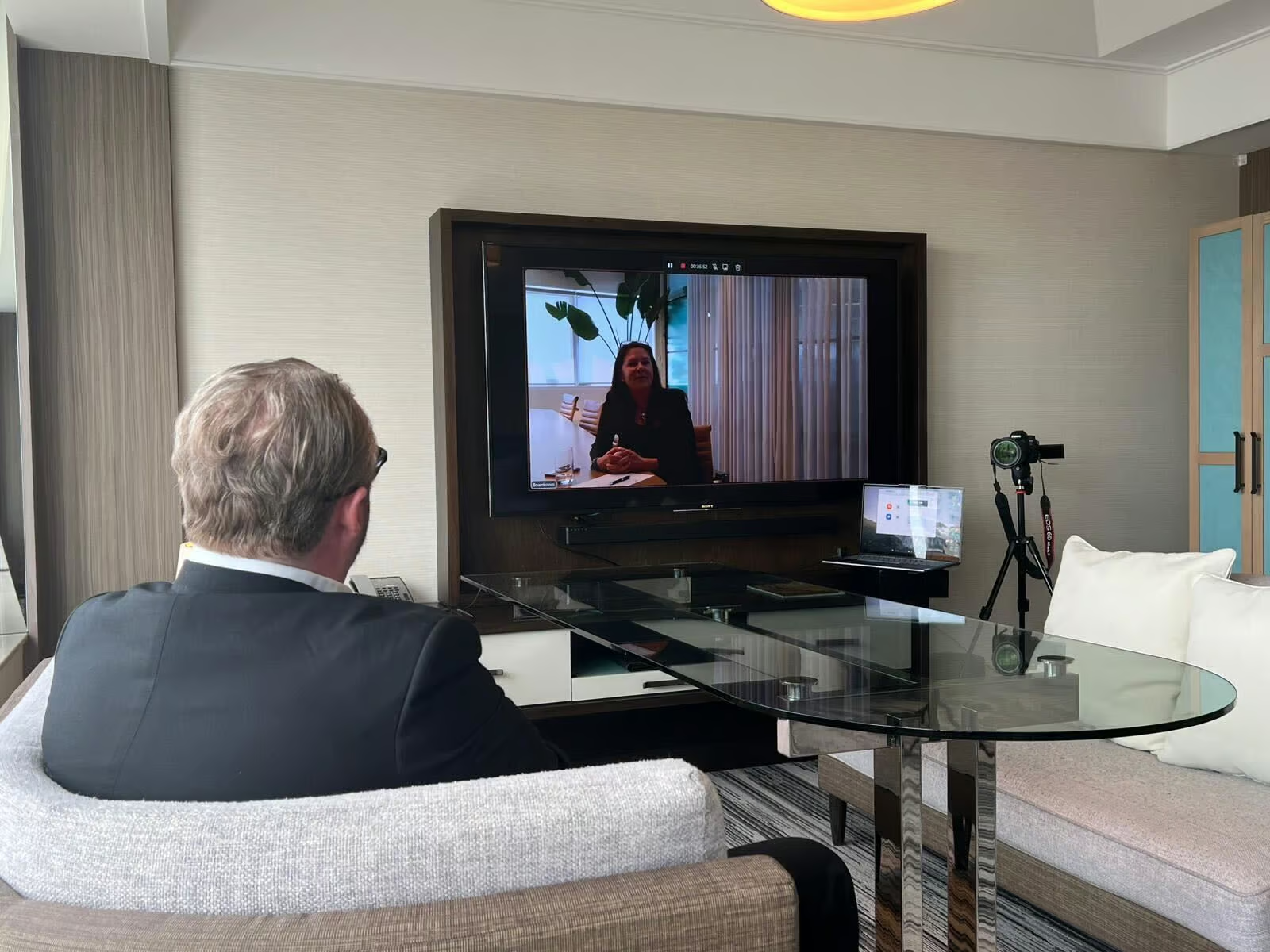
In a recent conversation with Tiffany Besnard, Head of Hedge Funds at 26 Degrees Global Markets, Stefan Nilsson, Founder of the Hedge Funds Club and CIO & Co-Founder of Terrasias Capital Ltd, shared his candid perspectives on what hedge fund allocators truly value, common missteps managers make, and how funds can better position themselves to attract sustainable capital.
Differentiation Outweighs Performance
One of the biggest misconceptions among fund managers, Stefan explains, is that impressive numbers alone will not attract investors.
“If you sell on numbers, you die by numbers,” he says. “Good performance is expected. Numbers only matter once an investor is already interested in you.”
Many managers, particularly in Asia, rely on emails or pitch materials that focus almost exclusively on returns. While performance is necessary, it is rarely sufficient. Hedge fund allocators are often already invested in diversified portfolios, and incremental outperformance rarely justifies replacing or adding new managers. Differentiation whether through a unique investment approach, a niche strategy, or an innovative perspective becomes the key to catching a hedge fund allocator’s attention.
“If you’re just saying you’re a little better than existing managers, that’s not enough for an allocator to switch or add,” Stefan emphasizes. “You have to be different.”
The Marketing Mistakes Managers Keep Making
Stefan highlights a recurring issue: poor communication and generic outreach. Many managers send unsolicited monthly reports or performance summaries without context, personalisation, or a clear explanation of what makes their fund unique. “I get emails that say, ‘Please find our monthly report attached.’ I think, who are you? Why would I open this?”
He encourages managers to put their strategy, approach, and unique value proposition front and center. Even a simple subject line that explains the fund’s strategy and points of differentiation can dramatically improve engagement. Honesty, particularly about setbacks or negative performance, resonates even more with hedge fund allocators. By framing communications around insight rather than just results, managers build credibility and trust, which can ultimately influence allocation decisions. “When a manager writes, ‘We were down 5% last month and here’s why,’ I want to read that. It shows they’re communicating openly and thoughtfully.”
Understanding Hedge Fund Allocators Requires Listening, Not Assumptions
Another common pitfall, Stefan notes, is making too many assumptions about a hedge fund allocator’s portfolio or investment preferences. “Managers often say, ‘We know how to work with family offices.’ No, you don’t. Every family office is different,” he explains. “Unless it’s a public pension fund, you don’t know their holdings.”
Instead, managers should focus on listening, asking questions, and tailoring their approach. Understanding investors’ needs and objectives before pitching ensures your message resonates and avoids the pitfalls of generic outreach.
Validate Investor Demand Before Launching a Fund
Stefan stresses that many managers make the mistake of setting up a fund without first confirming demand. “I’ve seen firms set up offices and hire teams before speaking to investors. Then they launch and realize no one wants to invest. I try to be honest even if it’s not what they want to hear.”
His advice is simple and practical. Engage potential hedge fund allocators early, test your investment thesis and fund structure, understand who your target investors are and adjust your approach or reconsider launching by taking a disciplined, investor-first approach, managers can save time, resources, and reputational risk while increasing the likelihood of successful capital raising. At 26 Degrees Global Markets, we continue to work with both hedge fund allocators and managers to foster these meaningful connections, helping hedge funds navigate the evolving investment landscape successfully.
If you’re a fund manager or hedge fund allocator and would like to find out more, explore our Fund Manager and Allocator pages, or get in contact with our team:
Get in contactInsights
Latest insights from
26 Degrees




 Hedge Funds
26 Degrees Outsourced Trading Services
With global coverage, access to advanced trading technology, and the ability to leverage the expertise of seasoned professionals, 26 Degrees outsourced trading services are purpose built to support hedge funds struggling to maintain round-the-clock trading desks.Exclusive Content
Interviews with our fund manager network

Fireside Chat - Episode 8: Blue Creek Capital
Tiffany Besnard sits down with Bill Baruch, the Founder and President of Blue Creek Capital Management, Blue Line Futures, and Blue Line Capital.The pair discuss the current macro environment, inflation and how metal additions to a traditional portfolio can contribute to diversification.
Fireside Chat - Episode 6: Antiloop
Founded in 2020, Antiloop is a multi-strategy hedge fund which combines several different asset classes using a quantamental approach.The company manages two funds: Atlas, a multi-strategy fund with a systematic-discretionary approach targeting 7-10% yearly volatility and double-digit returns, and Cygnus, a tactical asset allocation strategy with a focus on commodities targeting 10-15% volatility.

Fireside Chat - Episode 5: Alpha Alternatives
Prashant Kothari is the Founder and CEO of Alpha Alternatives Singapore, a multi-asset class, proprietary capital investing, and asset management platform driven by a commitment to alpha generation and strategic partnerships.The firm is dedicated to reshaping the asset management industry by transitioning from an AUM led model to one that is performance led and charged.
Episode 4: Golden Horse Fund Management
In this edition, Head of Hedge Funds Sales APAC and North American, Tiffany Besnard, sits down with Lawrence Chen, Co-Founder and CEO of Golden Horse Fund Management.Regulated by the Monetary Authority of Singapore, Golden Horse Fund Management, harnesses the power of predictive analytics, artificial intelligence (AI), machine learning (ML) and quantitative investment strategies, alongside leveraging advanced mathematical modelling, computer systems and data analysis in the continuous pursuit of alpha.

Fireside Chat - Episode 3: Blue Fire AI
In this edition, Global Head of Prime, Hedge Funds Andrew Bradshaw sits down with Samir Rath, CEO of Blue Fire AI to discuss ‘Emmalyn’ the world’s first autonomous active asset manager.The Emmalyn long short US equity absolute return strategy has been in stealth mode with a very large US platform and is being launched this year for wider distribution to allocators looking for best in class absolute return products.
Fireside Chat - Episode 2: GAO Capital
Our second Fireside chat is with Chauwei Yak, Founder and Chief Executive Officer at GAO Capital, an alternative Singapore-based asset management firm founded in 2008 with family office roots.The interview will discuss Chauwei's Always Seek Value Fund (ASV), a multi-manager, multi-strategy equity fund focused on Asia. The Fund seeks uncorrelated results to the Asian equities market and diversification of opportunities within the region including Japan and India.

Fireside Chat - Episode 1: Blue Orca Capital
Our first Fireside chat is with Soren Aandahl, Chief Investment Officer at Blue Orca Capital. Blue Orca specialises in providing a market neutral, short selling activist strategy.The firm also performs investigative research on public companies in APAC and the US.