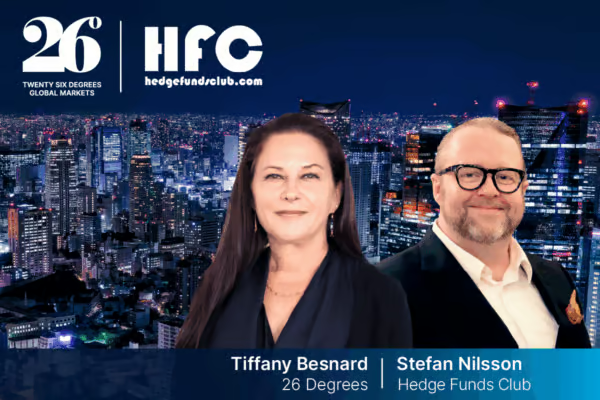
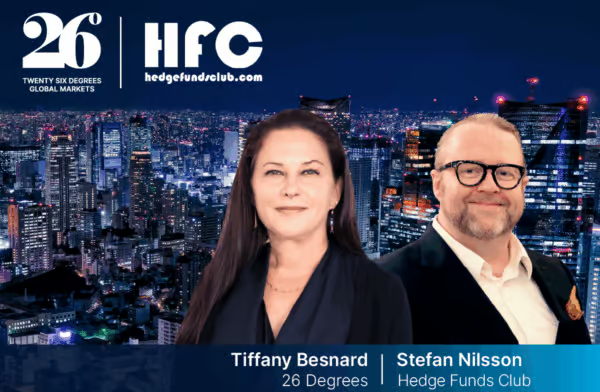
Fireside Chat - Episode 9: Hedge Funds Club
Transcript
Tiffany: Hi Stefan, good to see you. Thank you for joining me this morning.
Stefan: Thank you for having me. Good to see you again. It’s been a few weeks.
Tiffany: It has been. So, let’s start off, I was in Dubai for your inaugural, HFC event. So tell me why did you decide to start up in Dubai when you’ve been running these events for the past 20 years? What was the thinking behind that?
Stefan: Well, there were a couple of different reasons, as some people may know or may not know. Before we launched a hedge funds club, I was actually running hedge fund events in Dubai. and that was between 2000, 2004, so more than 21 years ago. And I’ve never been back. and obviously things have changed a lot since those days in Dubai.
And that’s when I realised as we were celebrating 20 years of the hedge funds club. And Dubai kept popping up and Middle East, obviously Abu Dhabi and other parts, investors around the region. And what I realised when I started looking into it is the difference now is you have a lot of the big firms, the big hedge fund firms have set up trading teams, investment teams, research teams.
In Dubai and Abu Dhabi. so the UAE all of a sudden is actually a real hedge fund, space. Back then when I was active there, it was basically local and regional investors and fund managers flying in from the west, pitching them. And that was a very different dynamic. And that’s when I realised, okay, well if you have all these funds there and you have investors there.
Then we can bring the hedge funds club there and obviously with the backing of, firms like 26 degrees, we could do it because everyone else is also paying attention to Dubai. So that’s the reason we actually went back and did it. And, I was very. Pleased with seeing how Dubai has developed.
Obviously the DIFC has blossomed into something very interesting. Government is fully behind developing this. there seems to be good support from the industry, from the government, from the regulators. The whole thing is there and people are moving there, and it looks like a lot of traders and PMs from London specifically have been relocating there, which is great to see.
So it’s a very diverse group because back in the day when I was doing Dubai, there was a lot of locals. Now you have, I mean, it looks like if it was London or New York or anywhere – really diverse as you saw yourself.
Tiffany: Well, it was definitely a great buzz at the event for sure, and it was my first time to Dubai and I, I really enjoyed it. So thank you again for, for hosting us. So let, let’s, back up a second. So, for people who don’t know you, you run the Hedge Fund club event, a series of events around Asia and Dubai again for 20, 21 years.
So for people who don’t know you or your events, how would you, you describe it?
Stefan: Well to be, cheesy. We’re putting both the edge and the fund back into the hedge fund industry. I probably stole that from someone, but it’s essentially what it boils down to, because the reason I launched this was I moved from London to Tokyo, 21 years ago, and I ran a global macro hedge fund.
I ran the firm here in Tokyo and I didn’t know anyone. And I was sort of thinking like, how can I actually get to know investors? How can I get to know the industry? Other, you know, peers, service providers. And there was not much going on. There were some industry events and things, and I went to them, and in most situations I was the only fund manager and there were no investors basically.
And I thought, okay, well that’s no good because obviously the fund managers and the investors, that’s the lifeblood. Then you have service providers around that and creating a whole community, but, you need to have the fund managers and the, and the investors. And that’s sort of, when I was complaining about this at the dinner table, my wife said to me, stop complaining and just do an event yourself .
And obviously she’s always right. And so I decided, Hmm, hang on here. Okay. So I started calling people I didn’t know saying, you know, I run this fund, we’re gonna do a party. And everyone was like, what do you mean, what is it? And then on the spot I just said, oh, it’s the Hedge Funds Club. And then the reactions were, oh, it’s an industry thing.
I said, yeah, it’s an industry thing. So it was sort of, you know, making it up on the go. And the first events took place in June, 2005, here in Tokyo. and we had a big turnout and people then got surprised and we had, I mean, we don’t really allow journalists to attend nowadays because a lot of fund managers and investors want to have private conversations that are not quoted, you know, immediately.
Because obviously some of them are very high profile and move markets even so. But in the early days we had a couple of journalists and Business Week, which you know, was actually printed magazine people read back in the days, they wrote an article, a full page on, oh, it’s this secret club in Tokyo where hedge funds are getting together and, and then that really got people going because that was probably the first or second event they wrote that. So people all of a sudden like, what is this? Never heard of it. What’s going on? So we benefited from that greatly, but the whole idea is really. By invitation only, which means you can control who comes and what it is and how it turns out, and the people are invited are the fund managers and the allocators.
And then with, with sponsors like 26 Degrees and others supporting it, that’s how it’s, we can do it. So we ran these events in Tokyo for a number of years and we started getting a lot of fund managers and investors flying in from Singapore and Hong Kong. And that’s when I decided, okay, well let’s do events there as well.
Yeah, and I mean the format is very simple. There are no presentations, there are no forced meetings. It’s just social people come and you know, when you walk in their door, everyone there is relevant. You don’t have people who are not relevant or trying to sell you something, you know, whatever it may be.
Because obviously some, conferences are great, but you get forced to sit and listen to things you don’t want to listen to necessarily. I find myself at attending conferences and I’m just standing in the coffee area talking to people And then someone asked me, how was the conference, I said, brilliant. Oh, so you like the sessions? I didn’t go to any sessions. I was just networking and obviously everyone’s different, so, but that’s how I operate. For me, it’s, I want to meet people, and obviously, the Hedge Funds Club is me. I created it so I can decide what we do. And as long as people like you and the fund managers and investors like it, well then it works.
So with the hedge funds club, it’s all social and free flowing, you know, I think that’s why people actually enjoy it.
Tiffany: No, completely agree. I mean, I always enjoy your events when they’re always packed and you see some ratio of people that you already know, and it’s always good to catch up with old friends. And then you also have the opportunity to meet new people and this is very low pressure, unstructured environment and you end up like having really interesting conversations with, with new people.
So they’re super interesting, valuable events for sure. And fun.
Stefan: Thank you, that’s the aim now, but you’re touching on a good point there with reconnecting and catching up because building a network is not just about meeting new people. You have to nurture that network. So you being there and people are gonna be like, oh, Tiffany’s here, great, let’s talk to her, or that works. If you don’t show up, you don’t exist
Tiffany: Yeah. hundred percent. so let’s talk about, again, you’ve been, you’ve been in this space for. For some number of years. So let’s talk about the Asia hedge fund landscape. So what do you, what do you see changing? What has changed over the past 20 years from your perspective?
Stefan: I think the, one of the main trends or development has been these multi-strategy funds where, you know, they used to run a multi-strategy, like one fund that was a multi-strategy. Now they’re running these mega billion fund houses, with all these pods as they call them, with sometimes hundreds of portfolio managers.
And it’s, good and bad in my view because it becomes like a factory, and obviously a lot of it is about, okay, we need more money ’cause we’re gonna do this and that, and then. As an investor, I look at these things and I’m thinking, Hmm, okay. It’s sort of like the big banks. So I think it can be dangerous there as an investor, depending on what the investor is looking for.
But it’s certainly a trend where these five firms are becoming bigger and bigger. They’re bringing in talented managers, they’re bringing in smart new graduates into this, and they’re just growing. And also you see some of the spin outs from that because this is, has been happening for a number of years. So now some people have been there for a few years and then they spin out and launch their own fund. And so that has changed because before you didn’t really have that in Asia. You have that in New York, perhaps, and London, but that has also ballooned. So that is one big trend that I, that I see, or it might not even be a trend, but it’s, development of the industry.
Tiffany: Do you think that crowds out, you know, new managers who are operating in interesting niche parts of the market? Because all the inflows are going to the multi strats?
Stefan: Yeah, partly, I mean, for me as an investor, when someone emails me or calls me or approaches me and said, oh, you know, we run $40 billion, you know, let’s talk, and I’d be like, no. No interest. I’m just, no. You know? Whereas someone comes up to me and said, I’ve launched this fund. We run $20 million. Here’s what we do. Here’s why we’re different. I’d be, okay, cool. Let’s look at that.
But I think it’s more, I mean I think there’s a little bit of laziness with, with some of the big allocators and this, it drives me crazy sometimes. I mean, there was a big US pension fund who basically redeemed all their hedge fund investments, I guess earlier this year. And then they made this big statement, said like, hedge funds are not worth it.
They’re so expensive. And I thought, I mean, obviously I don’t know all the details, but I just looked at this. I was like, okay, so you allocated to a bunch of bad underperforming managers and then you’re blaming a whole asset class because you haven’t done your due diligence or actually done your job. So it’s like, well, that’s your problem.
That’s not the industry that was not delivering. That was you choosing the wrong fund managers. Yeah, and as someone who’s passionate about this industry, I was like, no, I’m not having that. That’s just plain wrong. I mean, of course there’s gonna be good managers and bad managers, and some funds will perform well for a few years and then they won’t perform, or they’ll shut down, or that’s how it is, is a system. It’s the hedge fund world, so you can’t blame an asset class.
Tiffany: Completely agree. I mean, I just came back from New York and I met with a lot of large family offices and fund of funds It was interesting to me that there’s this definite interest in Asia and there’s a definite interest in smaller managers because they do think that you’re gonna generate more alpha. You’re operating interesting niche parts of the market. So the, the whole trip I thought was, gratifying is not quite the right word, but it, it sort of proved the thesis of what it is that we’ve been focusing on here on the cap intro side is again, like these really interesting quality, smaller managers who can deliver and who deliver alpha.
Stefan: Yeah, I think some of these Western or sort of non-Asian investors, they need help. And there are some firms in Asia doing specialized due diligence and that type of thing. Now. not funds of funds, but rather consultants in that space. And some of them are brilliant and I think that’s probably gonna grow because they need help.
You can’t just, oh, we need to find some Asian managers. It’s like, yeah, okay. Well if you’re gonna build a portfolio and if you’re a multi-billion dollar firm and you wanna meet the best ones, well the best ones might be $50 million. So that means maybe you’re gonna allocate them $5 million, and if that doesn’t fit into how you operate, okay, well why are you looking at them?
Tiffany: Yeah. Agree.
Stefan: There’s a mismatch there sometimes with how they do things. And I’ve also seen this, ’cause I worked for a $5 million hedge fund and I worked for multi-billion dollar hedge funds and when Americans say small funds, they typically mean 500 million to a billion. And when they say a small fund here, we’ll talk about five to 50 million perhaps.
Yeah. It’s a very different scenario
Tiff: Yeah, for sure, for sure. let’s talk about. Japan. So we have a new Japanese PM and there’s been a ton of, activity in the Japan market. Activist strategies, you know, the market’s been on tear. What is your read on that and what do you think about what’s gonna happen going forward?
Stefan: It’s Dangerous ground. Yeah. Politics is, is always tricky, but what I’ve seen so far and what I know, I mean I’ve been living here for a long time. The policies of the new Prime Minister look good. She’s business friendly, she’s growth focused. She cares about Japan. So it’s sort of a Japan first approach to a certain degree, which I think all prime ministers and presidents should have.
You’re there to serve your country, but then at the same time, obviously you need to cooperate and do trade because it’s a global world, but on, on the surface, those policies and things that she has stated so far. Looks good. What I also like is she’s got a new coalition partner ’cause she’s running a minority government, which is not easy, but she, the LDPs, her parties is the LDP, the Liberal Democratic Party, which is sort of right of center.
Their long-term partner of 26 years. the Komeito party have left their coalition, I guess last week when they started negotiating after 26 years. And I think that’s good because that party had a lot of influence and they’re also a very niche. Party, they’re a religious party that is not necessarily in line with what the overall country wants.
So now maybe, you know, I think the biggest risk with the, with the new Prime Minister and the new government is they’re minority government. They need to cut deals for every big budget. Everything they need to push through, they need to come to compromises, in order to push it through the diet.
And, can they do it? Hopefully. But who knows? I mean, Japan has a history of one year term Prime Ministers. she is a Prodigy of, Abe, who was the prime Minister twice, who sadly was assassinated after he retired, but she comes out of his sort of group. and I think that’s good because he created, a, you know, a lot of interesting opportunities for Japan.
And for me, I’m not a Japanese citizen. I’m a Japanese permanent resident. I can’t vote here. So I’m happy if Japan’s doing well, but I can’t go and vote for anyone. So I can just try to support whatever is in charge and hope that things go well.
Tiffany: Makes sense for sure. Let’s go back to talking about allocators . Do you see, I mean, aside from the tendency to go into the, you know, multi-billion multi strategies, do you see other trends from the allocators that you talk to? In terms of red flags that they are wary of or things that they’re looking for?
Stefan: I think most investors look for different, and this is a major mistake many fund managers do in their marketing. I mean, I get a lot of emails and letters and approaches will say, people say, oh, look here, we’re so good. Our numbers are 2000000% up, and blah, blah, blah. And I always ignore that. I mean, if you sell on numbers, you die by numbers. And numbers only matters once you like someone. Once you’re interested, then you think, oh, they’re up. Whatever it is great. I mean, good performance is a given, but you can’t sell on numbers. And I think a lot of fund managers here in Asia. They just go out and, and they’re trying to be, show investors that they’re better than the competition.
You know, what they don’t understand sometimes is most fund, most investors obviously have existing portfolios. If you’re a global macro manager out of Japan or wherever. You go and say, oh, look here, we’re better than those macro managers. Yeah, maybe you are right now. Maybe not next month, maybe not next year.
But the advantages the other managers have, they’re already in the portfolio. So the investor’s not gonna look at you equally. They, we have this, these guys come in and say, we’re a little bit better. Well, is that good enough for us to then redeem and switch or add? No, it’s not. You have to be different. If you are different, you have a different approach to global macro, whatever the strategy is.
Then the investors might pay attention. But all the marketing from most fund managers, it’s just numbers, numbers, numbers. And we’re better. Yeah. And that doesn’t work. And I think they waste so much time on this. ’cause I get emails which says, please find our monthly, you know, report attached. And I’d be like, who are you?
What is it? I have no idea. Will I open it? No chance. I just delete it. It is just, I don’t care because you know, there might be a brilliant fund, but they’re crap at marketing, which means, I don’t wanna do business with them because they’re gonna have a problem at some stage if they don’t already have it.
I, you know, they assume that because you’re on some mailing list, which they probably added you to without your permission anyway, because that happens with almost every manager and they assume you know everything. It’s like I get hundreds of funds that I meet and talk to. I can’t remember everything unless you are top of mind for me, because you are different, and I’ve met you and I’m really thinking of allocating.
I can’t remember what you do or what your strategy is, so how about putting that. In the email saying, we’re a Japan equity long short manager, run by the, you know, whatever your difference is, your USP, then I might open it, you Yeah. You know, but that doesn’t happen. Some what I do like is when some manager I’m watching they will have a subject line saying, oh, we were down 5% last month.
Here’s why. And I’d be like, cool. Someone’s being honest, trying to explain, trying to talk about the markets. Great. I want to read that. And then you might actually allocate to that manager because they’re telling you something interesting. Trying to, you know, I mean, some managers have this approach.
We’re like, oh, we’re down. So we don’t want to talk to people. We don’t want to email people. I’ll be like, yeah, okay, well that means you’re dead. You are gone. So you can’t hide. You gotta. Keep talking to people, keep meeting people. yeah. And another problem I see with marketing of funds to Asian investors is there’s a lot of assumptions.
Like, oh, when they approach me, they say, oh, your family office, you know, we, we know how to deal with that. We understand family offices. And I’ll be like, no, you don’t. Every family office is different. No one’s the same. You don’t know anything about my portfolio and you think you understand how I operate and how No, you don’t.
So don’t tell me how you know things are. We think this will fit into your portfolio. When they have no, no idea what’s in my portfolio. So unless you approach a public pension fund where it’s, you know, public, what they have, then maybe you can take that approach. But obviously most investors do not publish what they have in their, you know, exact details.
So don’t assume, find out, do research, trying to understand or go to a meeting and ask questions and listen instead of talking. that kind of thing. It’s, I mean, I made all these mistakes, by the way, so I’m old enough. I’ve been around in the industry for more than quarter of a century, and that’s why people are like, oh, that’s wise. I said, yeah, ’cause I made all those mistakes. I’m not claiming to be some better than anyone else. I just made a lot of mistakes and I’m trying to learn from them.
Tiffany: Well, I appreciate your insight and I’m sure that the, the viewers of this, little chat that we have will also appreciate your insight.
Like this presumption of you are gonna fit into a portfolio or just selling yourself on numbers. And I don’t think that’s the way. allocators make decisions like particularly for emerging managers. Like the allocators that I talk to will say like, I wanna have a relationship with the fund. Like that’s why I’m not going to this scraping large multi where I’m just gonna be a number and my five or $10 million check means nothing like I actually want to have. Yeah, I’m looking at intergenerational wealth creation and I wanna have a relationship with, with those managers, like we wanna grow together and have a, a partnership. So it comes down to a very human connection, really,
Stefan: Indeed. I mean, I’ve, I’ve seen allocations. I worked for global macro hedge fund more than 20 years ago, which was tiny. But a lot of the investors that came in, they invested in the fund because they wanted to tap into the brain of the portfolio manager. Yeah. ’cause he was very good at commenting on FX moves and various global macro sort of themes and they wanted to have that.
So we put it in as part of the sales thing. It’s like if you invest 1 million or 10 million. Okay, you get one hour with him every month, or if you put in more money, you get, you know, a day with him or whatever. We made it a sales pitch and that actually worked because people really wanted to do that. And I’ve had the same thing in venture capital where, I was promoting a Japanese, IT focused venture capital fund, and then a lot of industry people in the IT industry.
As in funds. Sorry, the firms invested in the fund. ’cause they wanted access to that deal making and the how the portfolio managers were thinking, you know, they didn’t actually care about the fund per se, you know, so it was kind of an interesting one where, okay, well whatever you can make money from, you know, I think this comes down to talk to the investors, ideally before you launch the fund, because there’s no need for your fund, no demand.
Well, why are you launching a fund? Then you gotta go and talk. It’s like. Have an idea, okay, if we do this, why would people invest? Who are these potential investors? Well, let’s talk to a few people beforehand. Maybe you need to tweak things. Maybe you realize no one cares. Okay, well, don’t launch the fund.
I’ve said that to. Many, many firms have come to me and said, I got this idea of doing this, hired people. And I’d be like, okay, so where’s the money? Yeah, we’re gonna go and get that. Okay, well, no, it’s not gonna work and people don’t want to hear it, but I’m always honest, sometimes too honest, but I always try to be, tell people, save them time and effort.
Why are you doing this if it’s not gonna work? You know, you need people to say no to you. but unfortunately what happens is they will go and hire offices. Yeah. People are very happy to rent out offices. They’re gonna hire lawyers, et cetera, do all this setup, and then there’s nothing, you know, so don’t listen to the service providers apart from the good prime broker. Of course.
Tiffany: It’s apart, apart from me because I, I also, I also will be brutally honest
Stefan: That’s why we get along
Tiffany: What do you think the trends are in the Asian hedge fund industry? Like where do you see the industry being like, I mean it’s a little bit difficult to say like you don’t have a crystal ball, but in like the next 10 years, what do you think the major trends are gonna be?
Stefan: I think the, the multi strategies will keep growing, for good and bad, the good thing will be you’re gonna have a lot of experienced people coming out of those shops. So the new startup managers will be better when it comes to the business setups and how to do things. Hopefully, also better marketing ’cause they’re gonna need that. we also see other trends. If you look at, I mean, the lines are blurred now. You know, you used to have hedge funds, you used to have other strategies. Now it’s kind of like hybrid, wishy-washy. so private credit is something which is booming now. Loads of things going on. I think we’re gonna see more of that in Asia and Australia because.
America, there’s too much leverage. Perhaps there’s too much risk taking, too many problems, which means some of the people here who are really smart, I’ve seen some really good, private credit managers in Australia, for example. They may be gonna succeed in getting that money because they’re operating on less risk and actually delivering decent returns.
So that could be growing still. Japan, obviously I’m a Japan man. Japan is doing great. I’ve seen new managers launch both based here and based in other parts of, of the region, including Australia. Because Japan, it’s always Japan, but now there’s more and more investors looking at Japan and more people turning up here.
You know, it’s, yeah, a lot of them trying to be low profile. But you, you see, I think, I mean. He kicked off, you know, perhaps with, you know, Warren Buffet did some major allocations a few years ago and I always skeptical.
It was like, I always tell other people, you’re not Warren Buffet, so it doesn’t really matter what he does, you know, don’t try to look at what he’s doing. But because he invested in a bunch of the big trading houses, a lot of people started paying attention ’cause they do follow him probably for the benefit of Japan in general, when you see those kind of symbolic moves, fund managers.
If you look at, what used to be called. activist managers, which are now more engagements or, you know, they’re trying to have, so yeah, soft edges, a bunch of them are coming in or are here and doing things. same thing on the PE and VC side. Things are, are increasing, and that’s good in general because most Japanese investors on an institutional level.
They have alternative investment sort of buckets. So if PE is doing well, they might do more hedge funds as well because of liquidity, because they get a budget for alternative investments typically. so I think that trend is good. Japan has always been a massive investor in hedge funds, typically with the big global firms because numbers needs to be big.
I remember when we ran that global macro fund here many years ago, pension fund here in Japan gave us $3 million. And they said, here’s $3 million. Please grow quickly because our budget for you is 30 million, but we can’t give you 30 million ’cause you’re too small. and I love that very, I mean very honest and very to the point.
Tiffany: Well, thank you for the time. I really enjoyed chatting with you, and I’m looking forward to seeing you on Monday night in Hong Kong.
Stefan: Indeed. We will see you on Monday and thank you for having me here and Monday. Bring your dancing shoes and maybe a raincoat. You know, there’s gonna be a lot of, lot of carnage at that event. In a good way.
Tiffany: I’ll be prepared.
Stefan: Excellent. I’ll see you then. Thank you very much for having me.
Tiffany: Take care. Thankyou.
Stefan: Thank you.
Exclusive Content
Interviews with our fund manager network

Fireside Chat - Episode 12: GaoTeng
Tiffany Besnard sits down with Daniel Li, Chief Investment Officer - Equity at GaoTeng Global Asset Management. Daniel shares his perspectives on China's evolving equity market, the impact of policy on investment decisions, and where he believes opportunities may be emerging beyond the market's most crowded trades.
Fireside Chat - Episode 8: Blue Creek Capital
Tiffany Besnard sits down with Bill Baruch, the Founder and President of Blue Creek Capital Management, Blue Line Futures, and Blue Line Capital.The pair discuss the current macro environment, inflation and how metal additions to a traditional portfolio can contribute to diversification.
Fireside Chat - Episode 6: Antiloop
Founded in 2020, Antiloop is a multi-strategy hedge fund which combines several different asset classes using a quantamental approach.The company manages two funds: Atlas, a multi-strategy fund with a systematic-discretionary approach targeting 7-10% yearly volatility and double-digit returns, and Cygnus, a tactical asset allocation strategy with a focus on commodities targeting 10-15% volatility.

Fireside Chat - Episode 5: Alpha Alternatives
Prashant Kothari is the Founder and CEO of Alpha Alternatives Singapore, a multi-asset class, proprietary capital investing, and asset management platform driven by a commitment to alpha generation and strategic partnerships.The firm is dedicated to reshaping the asset management industry by transitioning from an AUM led model to one that is performance led and charged.
Episode 4: Golden Horse Fund Management
In this edition, Head of Hedge Funds Sales APAC and North American, Tiffany Besnard, sits down with Lawrence Chen, Co-Founder and CEO of Golden Horse Fund Management.Regulated by the Monetary Authority of Singapore, Golden Horse Fund Management, harnesses the power of predictive analytics, artificial intelligence (AI), machine learning (ML) and quantitative investment strategies, alongside leveraging advanced mathematical modelling, computer systems and data analysis in the continuous pursuit of alpha.

Fireside Chat - Episode 3: Blue Fire AI
In this edition, Global Head of Prime, Hedge Funds Andrew Bradshaw sits down with Samir Rath, CEO of Blue Fire AI to discuss ‘Emmalyn’ the world’s first autonomous active asset manager.The Emmalyn long short US equity absolute return strategy has been in stealth mode with a very large US platform and is being launched this year for wider distribution to allocators looking for best in class absolute return products.
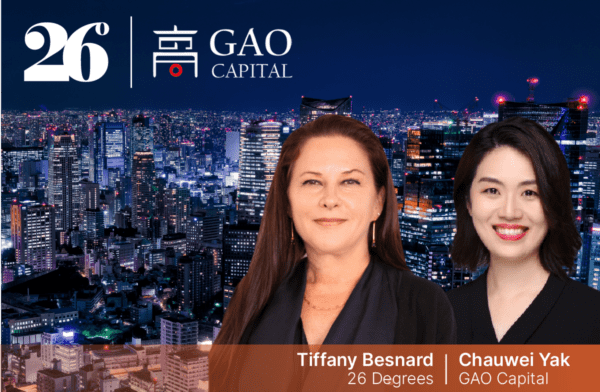
Fireside Chat - Episode 2: GAO Capital
Our second Fireside chat is with Chauwei Yak, Founder and Chief Executive Officer at GAO Capital, an alternative Singapore-based asset management firm founded in 2008 with family office roots.The interview will discuss Chauwei's Always Seek Value Fund (ASV), a multi-manager, multi-strategy equity fund focused on Asia. The Fund seeks uncorrelated results to the Asian equities market and diversification of opportunities within the region including Japan and India.

Fireside Chat - Episode 1: Blue Orca Capital
Our first Fireside chat is with Soren Aandahl, Chief Investment Officer at Blue Orca Capital. Blue Orca specialises in providing a market neutral, short selling activist strategy.The firm also performs investigative research on public companies in APAC and the US.
Industry Leading.
Globally Recognised.